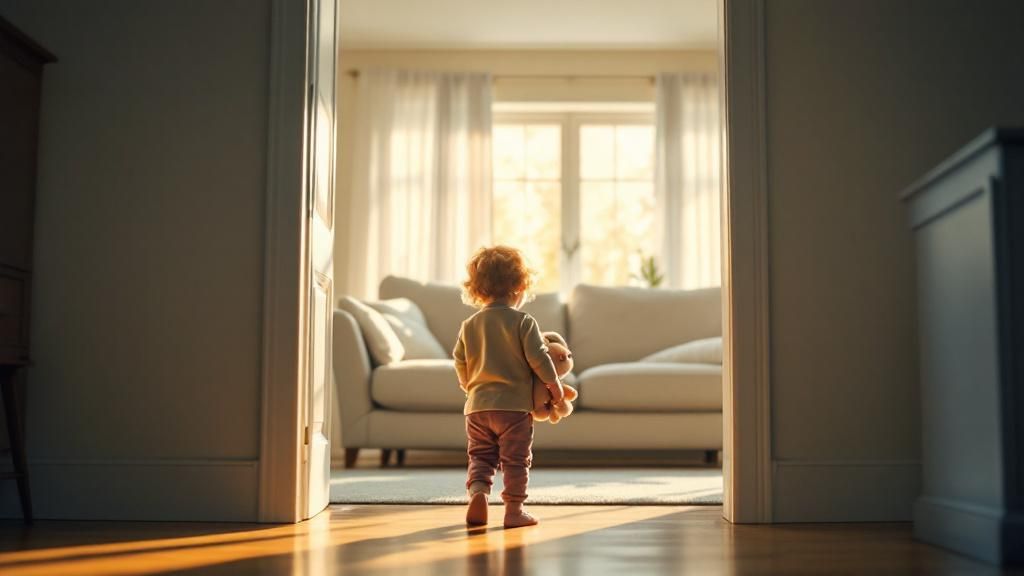
When Jacob finally got the keys to his new apartment after the divorce, he thought the hardest part was over. He'd painted his daughter's room her favorite purple, bought new furniture, and stocked the fridge with all her preferred snacks. But when 8-year-old Emma walked through the door for her first overnight visit, she stood frozen in the doorway, tears streaming down her face. "I want to go home," she whispered. "This isn't home."
If you're reading this, you've likely experienced something similar. The excitement of creating a new space for your children, only to watch them recoil from it like it's foreign territory. Here's what I've learned after working with hundreds of fathers navigating this challenging transition: children uncomfortable visiting father's new home is one of the most common—and heartbreaking—experiences divorced dads face. But it's also completely fixable.
Understanding Why Children Feel Uncomfortable in Your New Space
Your kids aren't rejecting you personally when they resist your new home. They're responding to a profound sense of displacement that goes beyond simple logistics. According to research from the American Journal of Family Therapy, 73% of children report feeling anxious about spending time in a parent's new residence during the first six months after separation.
Think about it from their perspective. Everything familiar has been uprooted. Their sense of security, which was anchored in one physical space, suddenly exists in two different worlds. They don't know where the bathroom is, which drawer holds the forks, or how the shower works. These might seem like minor details to us, but to a child processing major family changes, every unfamiliar element adds to their emotional overload.
Your children are also navigating something adults often underestimate: loyalty conflicts. They worry that enjoying themselves at dad's place somehow betrays mom, or vice versa. This internal struggle can manifest as resistance, tears, or claims that they "hate" your new home when what they really hate is feeling torn between two worlds.
The Irreplaceable Bond: Why Your Role as Their One Father Matters
Here's something that might surprise you: children only have one biological father in their entire lifetime, and this bond runs deeper than most fathers realize. Even when kids face confusion about divided loyalties during difficult family situations, that fundamental connection remains unshakeable.
Your children may seem distant or confused right now, but as they mature and develop their own independent thinking, they'll naturally gravitate back toward their father. The love you pour into them today—that genuine, protective care only a dad can provide—will come back to you multiplied when they're old enough to see past any temporary obstacles and recognize the irreplaceable role you've played in their lives.
I've seen this play out countless times in our work with families. Dads who felt completely rejected by their children during those early months often tell me years later that their kids eventually sought them out, saying things like, "Dad, I always knew you loved me, even when I couldn't show it back."
Creating Physical Comfort in Your New Home
Let's get practical. Your new space doesn't need to be a mansion, but it does need to feel like theirs too. Start small and build gradually. Here's what actually works:
Give them ownership. Let your children choose where they want to sleep—even if that means building a fort in the living room for the first few visits. Don't insist they use "their room" if it doesn't feel right yet.
Pack a comfort box together. During your next pickup, bring a small container and let them choose items from their primary residence to keep at your place. Maybe it's a favorite blanket, a small toy, or that worn-out stuffed animal. Having these transitional objects makes the space feel less foreign.
Create predictable routines. Kids crave consistency when everything else feels chaotic. If bedtime is always 8:30 with the same story routine, that becomes an anchor they can count on. Same with Saturday morning pancakes or Sunday afternoon walks.
Keep photos visible. Display pictures of happy family memories—yes, even ones that include your ex-spouse if the divorce is amicable. Children need to see that their history is honored, not erased.
The 50% Send, 50% Save Strategy for Ongoing Connection
If you're dealing with limited access or resistance from your children, here's a strategy that's proven incredibly effective: continue writing cards, buying gifts, and collecting meaningful items for your kids, but only send half of what you create or purchase. Keep the other half safely stored for when your children are adults.
This protects you on both fronts. If items never reach your children (which sadly happens in contentious situations), you have proof of your consistent efforts and love. If you stop sending things entirely, there's risk that your children might be told you've abandoned them, which deepens any existing distance between you.
Years later, when your adult children discover the boxes of unsent letters, gifts, and mementos you saved, they'll see undeniable evidence that you never stopped thinking of them, never stopped trying, and never stopped being their father. This approach has reunited countless fathers with their children because it preserves the truth until the day they're ready to hear it.
Addressing Emotional Barriers and Loyalty Conflicts
When children are uncomfortable visiting father's new home, they're often wrestling with complex emotions they can't fully articulate. Your job isn't to fix their feelings—it's to create space for them to exist safely.
"I know this feels weird right now," you might say. "It's okay to miss home when you're here. You can love both places." Give them permission to feel conflicted without trying to talk them out of it.
Avoid putting your children in the middle of adult conflicts. They shouldn't hear about legal battles, money issues, or your frustrations with their other parent. Keep your new home a neutral zone where the only agenda is spending quality time together.
Gradual Transition Techniques for Reluctant Children
Don't expect overnight success. Start with shorter visits during the day before attempting overnights. Maybe grab ice cream and hang out at your place for two hours, then gradually extend the time as they become more comfortable. Related reading: Father's Duty: Name Change Won't Affect Your Financial Ties.
Let them bring friends occasionally if the situation allows. Having a peer present can reduce anxiety and help your home feel more like a normal part of their social world rather than some separate, foreign territory.
Most importantly, be patient with setbacks. Your 10-year-old might seem fine for three visits, then suddenly have a meltdown about wanting to go back to mom's. That's normal. Healing isn't linear.
Building New Positive Memories and Traditions
This is where the magic happens. Children are naturally drawn to stability and joy, especially when their world feels chaotic. Every interaction you have becomes magnified in importance, so showing up as your best self—genuinely happy, emotionally steady, and thriving despite the circumstances—creates an irresistible pull.
Create new traditions that belong specifically to your time together. Maybe it's pizza Fridays, weekend bike rides, or working on a puzzle that stays permanently on your dining room table. These rituals become emotional anchors that your children will associate with feeling loved and secure.
Working with Co-Parents to Reduce Children's Anxiety
When possible, coordinate with your co-parent to present a united front about transitions. If your ex-spouse speaks positively about your new home and expresses confidence that the children will be safe and happy there, it dramatically reduces their anxiety.
Share photos of the children's space at your home so their other parent can see it's child-friendly and appropriate. Sometimes resistance from kids actually stems from a parent's own anxiety about the unknown living situation.
If cooperation isn't possible due to high conflict, focus entirely on what you can control: being consistently loving, patient, and emotionally regulated regardless of what's happening in their other household.
When to Seek Professional Help for Family Transitions
Consider family therapy if your children show persistent signs of distress that don't improve over several months: ongoing nightmares, regression in behavior, or complete refusal to visit. A skilled therapist can help everyone process the transition in a neutral setting.
Look for professionals experienced with post-divorce family dynamics who understand that children's resistance often has nothing to do with the father's parenting ability and everything to do with managing overwhelming change.
Remember: your emotional wellness and authentic positivity become a lighthouse that guides your children back. When you consistently demonstrate that being with dad means laughter, security, and unconditional love, you're building something no court order can mandate—their genuine desire to choose you.
How long does it typically take for children to adjust to their father's new home?
Most children need 3-6 months to feel genuinely comfortable in a new living situation, though every child is different. Younger children often adjust faster than teenagers, who may take up to a year to fully embrace the new normal. The key is consistency—regular visits, even if they're difficult at first, help establish familiarity over time.
What if my child refuses to sleep over at my new place?
Start with day visits and gradually work up to overnights. Don't force it—this often backfires and increases resistance. Instead, make your home so welcoming during shorter visits that they eventually ask to stay longer. Sometimes bringing a friend for the first sleepover can ease the transition.
Should I recreate their old bedroom exactly as it was?
Not necessarily. While familiar items provide comfort, an exact replica might feel forced or remind them of what they've lost. Instead, let your children help design their new space, incorporating some beloved items from their original room while creating something fresh that belongs specifically to your home together.
My ex-spouse says negative things about my new home. How do I handle this?
Don't engage in arguments or try to defend yourself to your children—this puts them in an impossible position. Instead, let your home speak for itself through consistent positive experiences. Focus on being the parent they want to be around, and over time, their own experiences will outweigh any negative messages they're receiving elsewhere.