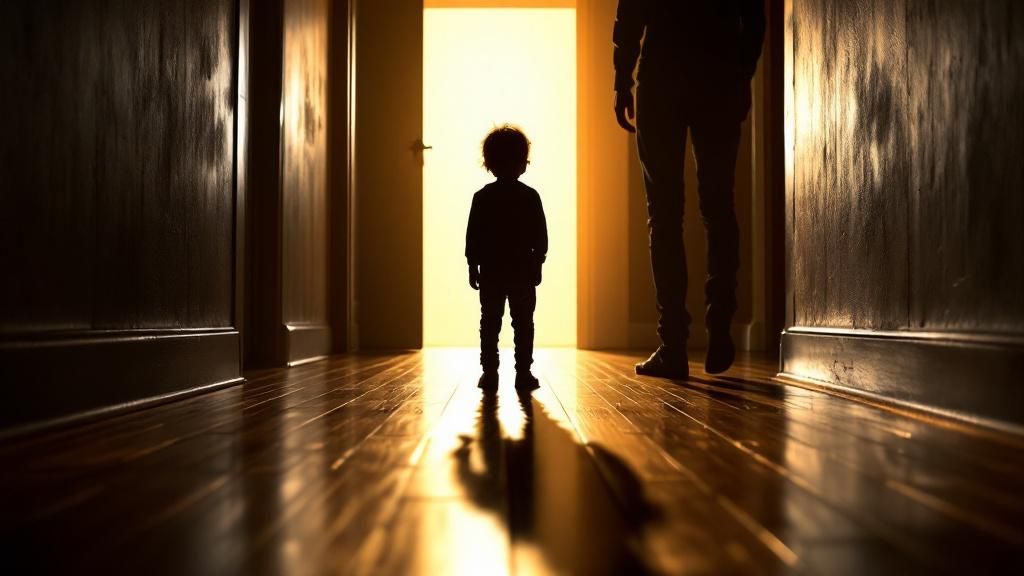
Nothing cuts deeper than hearing your own child say they're afraid of you. I've talked to countless fathers who describe that moment as feeling like their world cracked open. One dad recently shared how his six-year-old daughter, who used to run to greet him at the door, suddenly started hiding behind her mom when he came home. Another father told me about his teenage son who wouldn't make eye contact anymore and seemed to flinch when he raised his voice even slightly.
When children expressing fear of father suddenly becomes your reality, it's natural to feel defensive, confused, or even angry. But here's what I've learned through years of working with families: this fear is almost never about you being a "bad" father. Instead, it's usually a signal that something in the communication or emotional connection has broken down—and that's actually good news, because broken things can be repaired.
Understanding Why Children Suddenly Express Fear of Father
Fear rarely appears overnight, even when it seems sudden to us as parents. Children are incredibly perceptive emotional barometers. They pick up on tension, stress, and unspoken conflicts long before we realize they're aware. According to research from the American Psychological Association, children as young as six months can detect and respond to their parents' emotional states, often mirroring anxiety or stress they sense in the home.
Sometimes what we interpret as fear of us is actually their fear about the family situation itself. During my work with separated families, I've seen kids who weren't actually afraid of their father, but were terrified of the conflict between their parents. They learned that expressing reluctance to see dad made mom less upset, creating a painful dynamic where love gets twisted into apparent rejection.
The Emotional Reality Behind Your Child's Fear Response
Children don't have the emotional vocabulary or cognitive development to say, "Dad, I'm scared because our family feels unstable and I don't know how to process these big feelings." Instead, they show us through behavior. They might resist visits, act out, or seem withdrawn.
What's really happening inside their developing minds is often a mix of confusion, loyalty conflicts, and an overwhelming need for emotional safety. Kids want to feel secure with both parents, but when there's tension or conflict, they often feel forced to choose sides. That's an impossible burden for a young heart to carry.
Common Triggers That Create Distance Between Fathers and Children
Let's be honest about some of the patterns that can unintentionally create fear or distance. Anger is often the big one—not because dads are inherently angry people, but because many of us learned that anger was the only "acceptable" emotion for men to express. When we're actually feeling hurt, scared, or overwhelmed, it comes out as frustration or raised voices.
Emotional unavailability is another trigger. I remember talking with a father who was going through a difficult divorce. He was so consumed with legal battles and financial stress that he'd become distant and preoccupied during his time with his kids. They interpreted his distraction as rejection, which grew into fear that they'd done something wrong.
Inconsistency in our responses also creates anxiety for children. When kids can't predict whether dad will be patient or irritable, playful or serious, they start walking on eggshells. That's not a sustainable way to build a relationship.
How Your Own Childhood Experiences May Be Impacting Your Parenting
Here's something we don't talk about enough: many of us are parenting from the wounds of our own childhoods. If you grew up with a father who was emotionally distant, overly critical, or absent entirely, you might be unconsciously repeating those patterns—or swinging so far in the opposite direction that you're not setting healthy boundaries.
Sometimes children expressing fear of father suddenly is actually them responding to generational patterns we haven't recognized yet. The father who never learned how to regulate his own emotions will struggle to help his children feel emotionally safe. This isn't about blame—it's about awareness and the opportunity for healing.
Becoming the Emotionally Safe Father Your Children Want to Be Around
Children are naturally drawn to parents who make them feel secure and valued. Think about the adults you loved being around as a kid—they probably had a few things in common: they were present, predictable in their kindness, and genuinely enjoyed your company.
When you're facing challenges with your children's perception of you, your most powerful tool isn't defending yourself or trying to prove you're a good father. It's actually becoming the kind of person they naturally want to spend time with. Kids remember how you make them feel, not what you say about yourself.
This means working on your own emotional regulation first. Learn to recognize when you're feeling triggered and develop healthy ways to manage stress. Practice active listening without immediately jumping to solutions. Show curiosity about their world instead of judgment about their choices.
Practical Steps to Rebuild Trust and Connection
Start small and be consistent. If your relationship has become strained, don't try to fix everything in one grand gesture. Instead, focus on brief, positive interactions. Maybe it's a good morning text, a shared joke, or simply being fully present during a car ride without bringing up heavy topics.
Validate their feelings, even when they hurt. If your child says they're scared or uncomfortable, resist the urge to immediately defend yourself. Try saying something like, "I can see this is hard for you, and I want to understand how you're feeling." Learning emotional regulation techniques can help you stay calm during these difficult conversations. Related reading: Legal Advice: Opposing Name Change Petitions as a Father.
Create predictable positive experiences. Maybe it's Saturday morning pancakes or a weekly walk where you just talk. Children need to know they can count on you for good moments, not just corrections or serious discussions.
When to Seek Professional Help for Family Healing
Sometimes the breakdown in trust goes deeper than what you can repair on your own, especially if there's been a significant family trauma, divorce, or extended conflict. Family therapy can provide neutral ground where everyone feels safe to express their feelings.
If your child's fear seems disproportionate to anything you can identify, or if they're showing signs of anxiety or depression, it's time to bring in professional support. Our mission at HelpFathers includes connecting families with qualified counselors who understand the unique dynamics of father-child relationships.
Don't let pride prevent you from getting help. Seeking therapy isn't an admission of failure—it's an investment in your family's future.
Creating New Patterns That Attract Rather Than Repel Your Children
Remember this fundamental truth: children only have one biological father in their entire lifetime. Even when they seem distant or confused now, that bond runs deeper than temporary circumstances. As they mature and develop their own independent thinking, they'll naturally gravitate back toward their father—if you've been consistently working to become someone they want to be around.
Focus on living well yourself. When you're genuinely happy, emotionally stable, and thriving despite challenges, you become a magnet for your children. They want to be around people who make life feel lighter and more joyful, especially when their world feels heavy with adult conflicts.
This spring, commit to small daily actions that rebuild trust. Listen more than you speak. Show up consistently. Work on your own healing. The love you pour into them today will come back to you multiplied when they're old enough to see past any temporary obstacles and recognize the irreplaceable role you play in their lives.
FAQ
Why would my child suddenly be afraid of me when nothing has changed?
Children often process family stress or changes in unexpected ways. What seems "sudden" to us may have been building gradually as they picked up on tension, witnessed conflicts, or heard things that confused them. Sometimes their fear isn't actually about you, but about the instability they sense in their environment.
Should I force visitation if my child says they're scared to see me?
Forcing contact when a child expresses fear usually backfires and can damage trust further. Instead, work on understanding why they're afraid and addressing those specific concerns. Short, low-pressure interactions in comfortable settings often work better than enforcing full custody schedules until the relationship heals.
How long does it typically take to rebuild trust with a fearful child?
Recovery time varies greatly depending on the child's age, the reasons for their fear, and how consistently you work on rebuilding the relationship. Some children respond positively within weeks, while others may need months or even longer. The key is patience, consistency, and focusing on their emotional safety rather than rushing the timeline.
Can professional counseling really help if my child won't talk to me?
Yes, family therapists are trained to help children express difficult feelings in safe ways. They can also help you understand what might be driving your child's fear and teach you communication techniques that rebuild connection. Sometimes children will open up to a neutral third party when they can't talk directly to their parent about their concerns.